Background
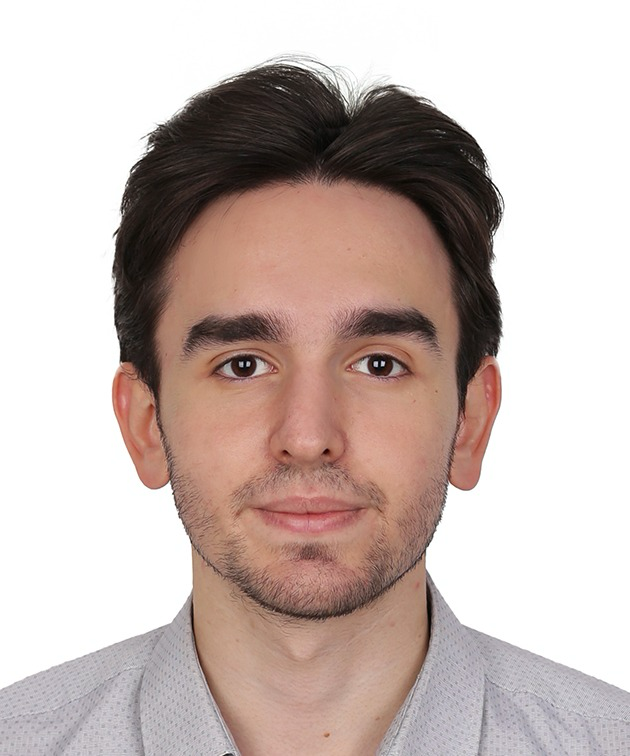
I am a PhD student in Computer Science at EPFL, working in the LiGHT Lab with Prof. Mary-Anne Hartley. My doctoral studies are supported by the EDIC Fellowship and the EPFL AI Center PhD Fellowship.
I graduated first in my class from Bilkent University's Computer Science program with a GPA of 3.96/4.00. Before joining LiGHT, I worked on diagnostic reasoning at EPFL's IMOS Lab and on RNA generation for drug discovery at Bilkent.
Outside computer science, I am interested in philosophy and economics, particularly how people form beliefs and make decisions under uncertainty.
Education
PhD in Computer Science, EPFL
School of Computer and Communication Sciences (IC) · Sep 2025 — Present
EDIC Fellowship · EPFL AI Center PhD Fellowship
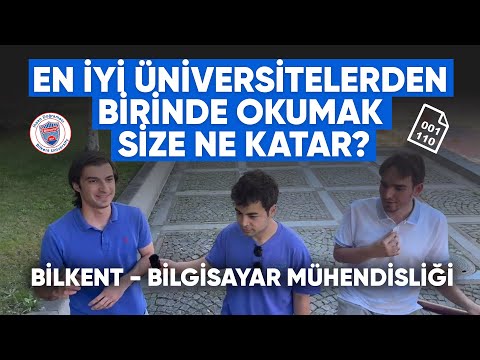
BSc in Computer Science, Bilkent University
Ankara, Turkey · Sep 2021 — Jun 2025
GPA 3.96/4.00 · Valedictorian
Current Focus
I study how language models gather information and make medical decisions through conversation. My work examines how they track possible diagnoses, respond to new evidence, and decide whether to ask another question or give an answer.
Medical reasoning through conversation
Understanding where models lose track of evidence or overlook coexisting conditions, and developing methods that help them maintain and revise diagnostic hypotheses.
Training for clinical reasoning
Improving how models ask questions, use clinical evidence, and recognise uncertainty through supervised learning and reinforcement learning.
Structured inference
Combining language models with probabilistic reasoning, search, and verification to make clinical decisions easier to inspect and evaluate.
Publications
CLIMB: A Clinical Multimorbidity Benchmark for Diagnosing Co-occurring Conditions through Multiturn Conversations
† Equal contribution · ‡ Equal supervision
Effective Communications in the Goal-Oriented Semantic Signal Processing Framework: A Case Study in Cooperative Driving
Research and Industry
Research Experience
Doctoral Researcher
LiGHT Lab — EPFL · Prof. Mary-Anne Hartley
Developing methods for medical reasoning through conversation, with explicit tracking of diagnostic beliefs and selection of follow-up questions. Building benchmarks for diagnosing coexisting conditions and working on post-training for Meditron and Apertus.
Doctoral Researcher
IMOS Lab — EPFL · Prof. Olga Fink
Built a diagnostic agent that tracks fault hypotheses and updates their likelihood as evidence arrives. Also worked on mechanical bit readout using inverse dynamic programming.
Undergraduate Researcher
CICEKLAB — Bilkent University · Prof. A. Ercüment Çiçek
Trained models to generate RNA sequences conditioned on target proteins. Used reinforcement learning to optimise predicted binding affinity and evaluated sequence properties and stability.
Undergraduate Researcher
Semantic Communication Group — Bilkent University · Prof. Orhan Arıkan
Worked on wireless bandwidth allocation and semantic communication for cooperative driving in collaboration with Huawei Ottawa. Developed reinforcement learning methods and evaluated them in CARLA simulations.
Industrial Experience
AI Engineer
ROKETSAN
Built LLM agents for situational awareness in simulated scenarios, document retrieval, and research report generation.
NLP Intern
Digital Transformation Office — Presidency of Turkey
Designed an LLM-based pipeline for internal data leak detection using Llama 3 and DeepSeekCoder v2. Fine-tuned RoBERTa for sentiment analysis and developed a T5-based text summarisation pipeline.
Candidate Engineer
ASELSAN — MGEO Elektrooptic
Developed camera system applications and worked on communication obfuscation in the electro-optic systems division.
AI Research Intern
Huawei
Built traffic simulations in CARLA and trained a Deep Q-Network for autonomous vehicle control.
Selected Projects
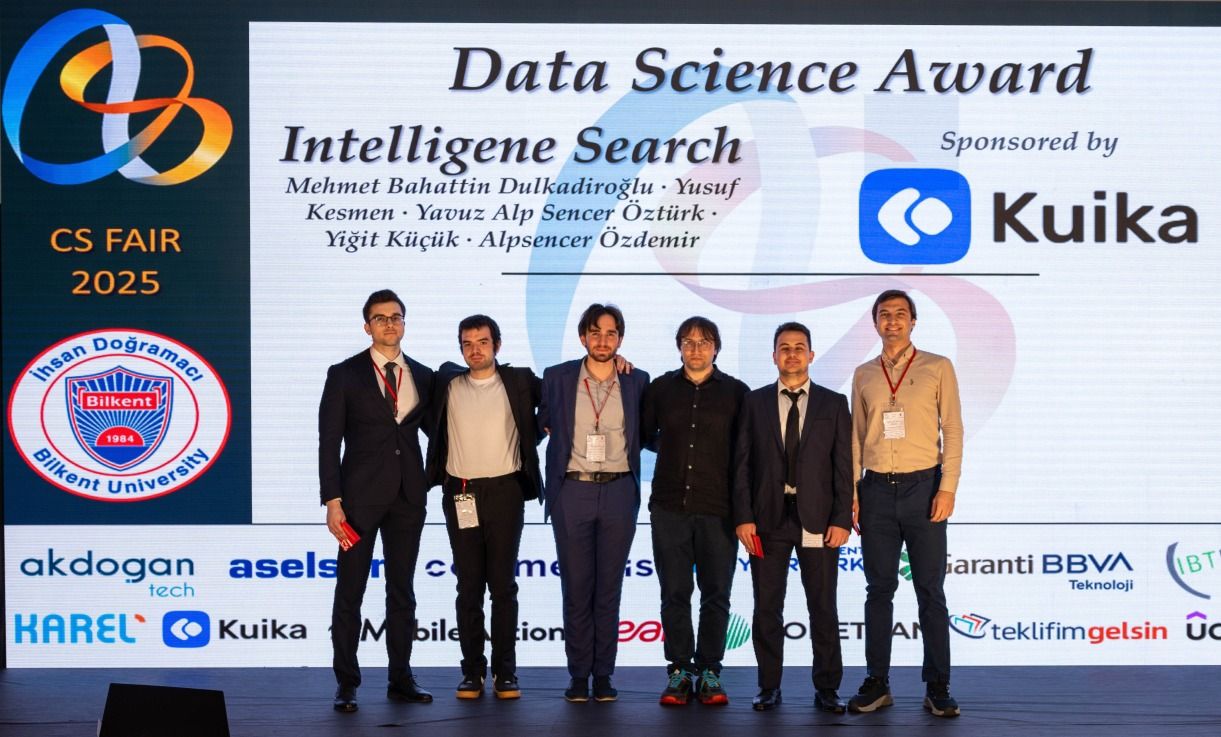
Variant-Net Search Engine
A genomics search engine built around a graph of over 300 million nodes and one billion edges. Combines graph and semantic retrieval with agents that search and analyse biological evidence.
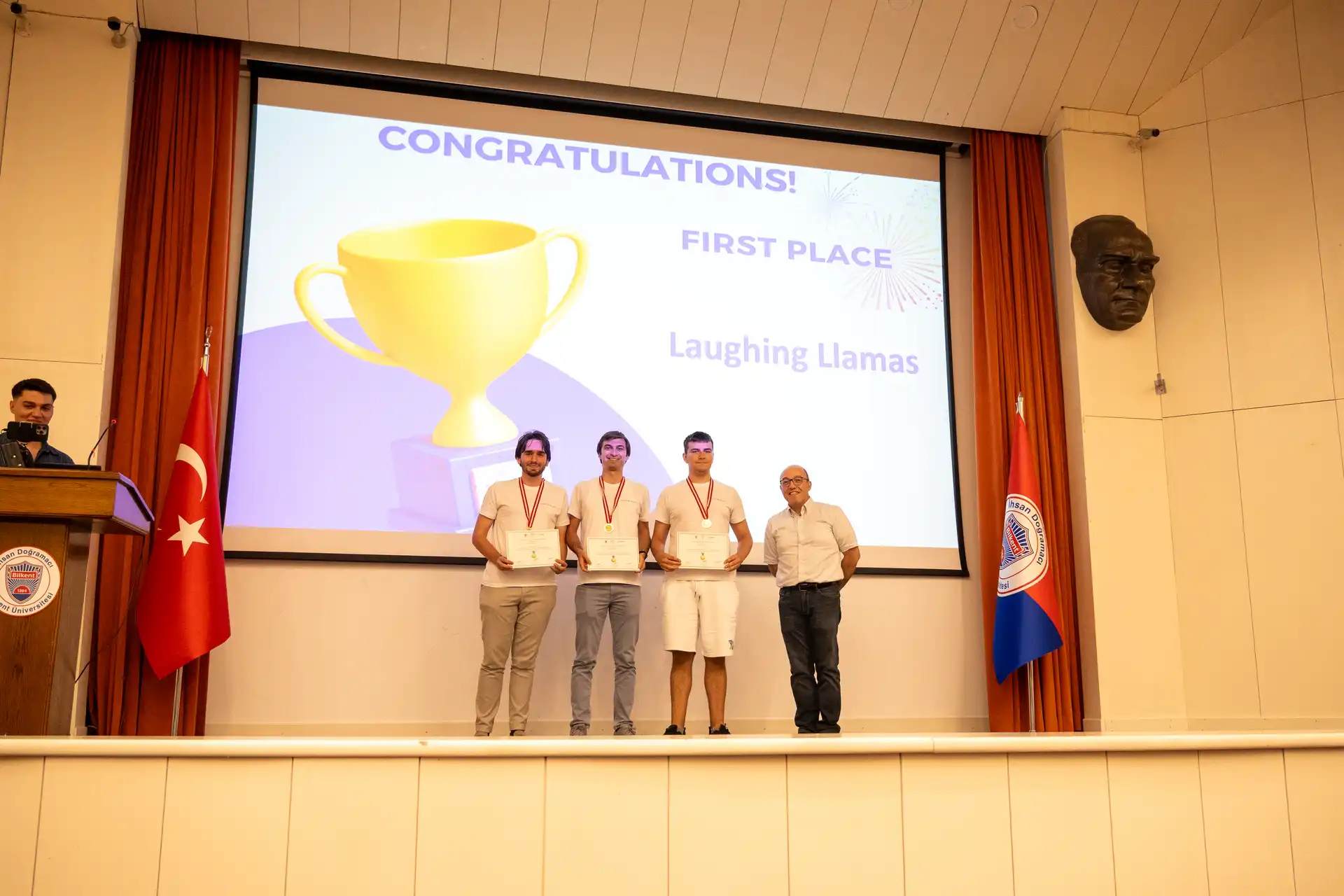
Rubber Duck AI
A learning platform where users explain concepts from their documents to AI agents. The agents ask questions, identify gaps, and help users refine their understanding.
Drone Coordination with LLMs
A simulated drone team with a shared language model planner. The planner coordinates the team, while individual agents handle navigation and respond to local threats.
Bilkent Online
A platform for Bilkent students with a marketplace, messaging, community groups, and a university chatbot.
$5K MicrosoftProject Reports
Agentic Root Cause Analysis via Hypothesis-Driven Diagnostic Reasoning
Enhancing RNA Generation for Protein Binding via Group Relative Policy Optimization
A Transformer-Based Framework for RNA-Protein Interactions: Integrating GenerRNA and ProtBERT
Cross-Modality Sequence Generation for Compound-RNA and Protein-RNA with Multilingual T5
Honors & Scholarships
EPFL AI Center PhD Fellowship
Doctoral research supported by the EPFL AI Center
EPFL Fellowship
EDIC Doctoral Program admission with full fellowship
CS Valedictorian
First in the Computer Science graduating class at Bilkent
Best Data Science Project
Variant-Net Search Engine · Bilkent CS492
1st Place · Amazon University Engagement
Rubber Duck AI · $4,000 scholarship
ALES National Rank 28
Among 139,565 candidates in the graduate entrance exam
Bilkent Full Scholarship
Comprehensive scholarship for academic excellence (2021–2025)
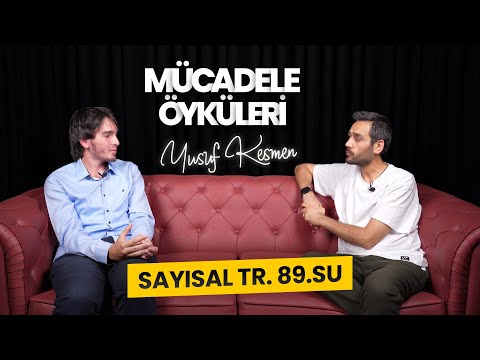
YKS National Top 100
Quantitative track in 2021 and verbal track in 2022
Community & Service
Bilkent AI Society — Co-Founder & General Secretary
Co-founded and led a 500+ member student society. Secured partnerships with NVIDIA and Notion. Hosted speaker events featuring researchers from OpenAI, Google, and Meta.
180 Degrees Consulting — Bilkent
Provided pro bono consulting for AÇEV, the Mother Child Education Foundation, through the Bilkent branch of 180 Degrees Consulting.
Get in Touch
Research and student projects
I welcome conversations about medical reasoning, language models, and research collaborations. Email is the best way to reach me.
I am also open to supervising semester projects and BSc or MSc theses. If you are interested, send a short introduction with your background, the questions you would like to work on, and any relevant projects.
Schedule a Meeting